
Our Heritage
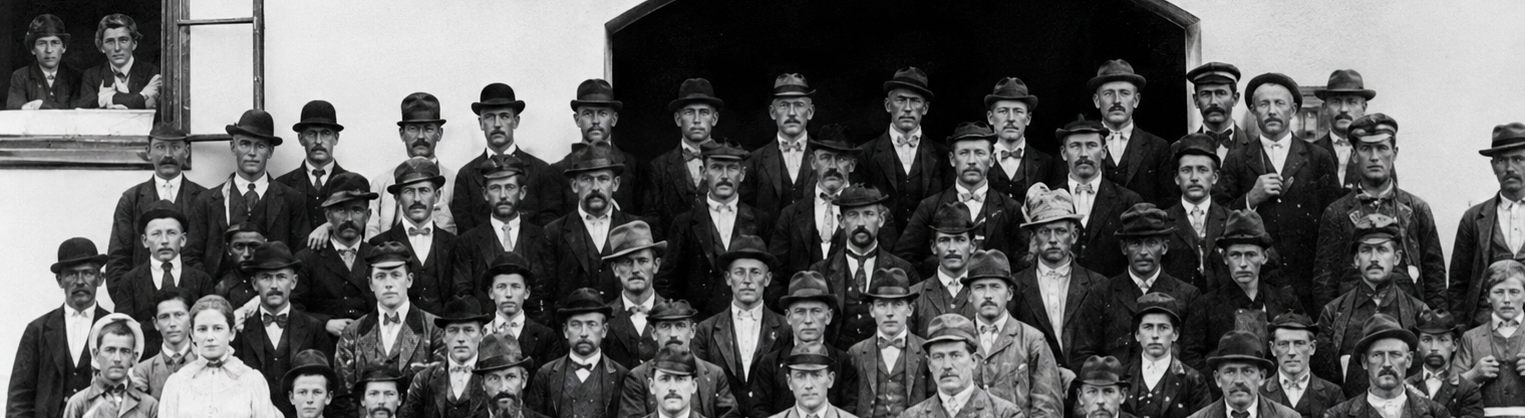
Masterpieces hand-crafted in tradition.
1836 — the Beginning
1858 — Joh. Loetz Witwe
1889 — Grand Prix, Paris
1893 — Grand Prix, Chicago
1898–1905 — The Glory Years
1900 — Grand Prix, Paris
Hoffmann · Moser · Hofstötter · Kirschner · Prutscher · Bauer
1904 — Grand Prix, St. Louis
2026 — Vienna. The Story Continues.
THE STORY OF LOETZ
From a glassworks in the Bohemian forest to one of the defining names of European Art Nouveau
The story of LOETZ begins in 1836 in Klostermühle — today Klášterský Mlýn — in the forests of Southern Bohemia. It was here that Johann Eisner established the glassworks from which one of the most celebrated names in European art glass would eventually emerge. After several changes of ownership, the manufactory came into the hands of Susanne Gerstner, widow of the glassmaker Johann Loetz. Under her direction, the glassworks expanded considerably, producing crystal, overlay and painted glass. The name by which it would become known throughout the world — Johann Loetz Witwe — preserved the memory of her late husband while the enterprise itself increasingly reflected her own entrepreneurial achievement.
A decisive new chapter began in 1879, when Susanne transferred the company to her grandson, Maximilian von Spaun. The following year, von Spaun appointed Eduard Prochaska to oversee the glassworks. Together they transformed Klostermühle into an increasingly innovative operation, modernising its production and experimenting with new techniques, colours and surfaces. By around 1890, LOETZ employed approximately 200 people and maintained its own cutting, enamelling and gilding workshops.
The glass of these years was characterised by technical experimentation. LOETZ developed patented Intarsia glass and elaborate marbled surfaces imitating precious and semi-precious stones such as onyx, malachite and red chalcedony. These objects established the manufactory's reputation well beyond Bohemia. At the Exposition Universelle in Paris in 1889, LOETZ received a Grand Prix, sharing the highest distinction with leading glassmakers including Émile Gallé and Salviati. Four years later, its Alpenrot glass received another Grand Prix at the World's Columbian Exposition in Chicago in 1893.
Yet the period that would define LOETZ for generations was still to come.
A new language in glass
During the final years of the nineteenth century, European decorative arts were undergoing a profound transformation. Historicism was giving way to the sinuous forms, new materials and radical experimentation of Art Nouveau. LOETZ was already experimenting with metallic and iridescent surfaces by the mid-1890s, obtaining patents for glass with a metallic shimmer in 1895 and 1896. The encounter with the extraordinary iridescent glass of Louis Comfort Tiffany further demonstrated the artistic possibilities of this new direction.
But LOETZ did not remain an imitator.
At Klostermühle, generations of Bohemian glassmaking knowledge were combined with new chemical, technical and artistic experimentation. From this emerged the celebrated Phänomen series: glass characterised by complex trails and combed threads, layered colours and metallic iridescence. Light no longer merely passed through the object; it became part of its surface.
The years around 1900 marked the artistic zenith of the manufactory.
LOETZ increasingly worked with artists and designers beyond the glassworks itself. Among them were Marie Kirschner, Franz Hofstötter, Josef Hoffmann, Koloman Moser, Leopold Bauer and, somewhat later, Otto Prutscher. These collaborations connected the technical virtuosity of Klostermühle with the radical new design culture developing in Vienna.
Paris, 1900
The defining international moment came at the Exposition Universelle in Paris in 1900.
LOETZ arrived with an ambitious presentation centred on its new Art Nouveau glass. The exhibition included 89 new models, the majority designed by Franz Hofstötter, alongside earlier works. The response was remarkable. Contemporary critics praised the presentation, objects were acquired by museums and private collectors, and many of the designs subsequently entered regular production.
The international jury awarded LOETZ a Grand Prix, the highest class of distinction in its section.
The company found itself among an extraordinary group of names: Tiffany from the United States, Gallé and Daumfrom France, and fellow Austrian house Lobmeyr were among the other Grand Prix recipients.
For LOETZ, Paris represented more than an award. It confirmed the transformation of a Bohemian glassworks into one of the leading artistic glass manufacturers of its age.
The success continued. New Phänomen variations appeared alongside décors such as Papillon, Cytisus, Formosa, Diaspora, Nautilus, Orpheus and Vesuvian. Organic, almost sculptural forms existed alongside the strikingly geometric designs of Marie Kirschner. In 1904, LOETZ received another Grand Prix at the Louisiana Purchase Exposition in St. Louis.
Klostermühle and Vienna
One of the most fascinating aspects of LOETZ was the dialogue between Bohemian craftsmanship and Viennese design.
The glass itself was made at Klostermühle, but the artistic world around it increasingly intersected with Vienna. LOETZ produced designs associated with some of the central figures of Viennese modernism and supplied important Viennese retailers such as E. Bakalowits. Its collaborations eventually extended into the orbit of the Wiener Werkstätte, particularly through designs by Josef Hoffmann and Otto Prutscher.
This relationship produced an intriguing tension that remains central to the identity of LOETZ: between the unpredictable behaviour of molten glass and the discipline of architectural design; between organic surfaces and geometric form; between the forests and workshops of Bohemia and the intellectual culture of Vienna.
Innovation beyond Art Nouveau
The extraordinary success of Phänomen glass could not last indefinitely. By the middle of the first decade of the twentieth century, tastes were changing. LOETZ responded with new techniques and décors, including Titania, Carrageen, Melusin, Markasit and Metallin, while collaborations with Viennese designers became increasingly important.
Josef Hoffmann, Leopold Bauer and Otto Prutscher contributed designs of increasing geometric clarity. In 1909, the glass specialist Adolf Beckert became artistic director, bringing particular expertise in etched decoration. LOETZ subsequently exhibited new etched designs and Tango glass at the Deutsche Werkbund exhibition of 1914.
But the world around Klostermühle was changing dramatically.
Financial difficulties were compounded by a major factory fire and the outbreak of the First World War in 1914. Production continued after the war, including successful coloured opal glass, but the conditions under which the great flowering around 1900 had occurred could not simply be recreated. The Great Depression, another fire in 1930, changes of ownership and the political upheavals of Central Europe progressively weakened the enterprise. The historic company ultimately entered bankruptcy again in 1939.
A legacy preserved in glass
The end of the historic manufactory did not mark the end of LOETZ.
Its glass had already entered museums and important private collections during the lifetime of the company. Objects produced at Klostermühle continued to be studied, exhibited and collected long after the furnaces fell silent.
Today, historic LOETZ works are represented across major international museum collections. The survival of these objects is particularly important because they reveal the extraordinary breadth of the manufactory: from nineteenth-century marbled glass to the iridescent Phänomen masterpieces around 1900 and the increasingly geometric works associated with Viennese modernism.
The secondary market has likewise remained active for generations, with LOETZ objects continuing to appear in international decorative-arts auctions. The finest examples — particularly rare Phänomen works and important artist-designed pieces — have become recognised objects of collecting in their own right.
What survives is therefore more than a historical company name. It is a remarkably extensive vocabulary of colour, surface, technique and form.
Vienna, 2026
190 years after the establishment of the glassworks at Klostermühle, a new chapter begins.
In Vienna, the name Joh. Loetz Witwe enters the present again. The purpose is not to reproduce the past as nostalgia, nor to imitate objects created more than a century ago.
Instead, the new LOETZ looks to the principle that made the historic manufactory remarkable in the first place: experimentation in glass.
The first new designs explore layered colour, cutting, optical depth and geometric structure through contemporary objects conceived in Vienna. They draw upon a heritage stretching from the furnaces of Klostermühle to the artistic experimentation of Vienna around 1900, while seeking a language of their own.
The historical LOETZ belonged to an age in which artists, architects, craftsmen and glassmakers collectively pushed the material beyond what had previously seemed possible.
That spirit provides the point of departure today.
1836 — 2026
THE STORY CONTINUES.
Jugendstil aesthetics.
Through a combination of classical Jugenstil elements, forward-looking designs and reliable materials, LOETZ creates unique glass objects, at the crossroads between history and modernity. Timeless beauty.

International museum presence.
With over 190 years of tradition, LOETZ is an internationally celebrated house. Our art of glass-making is displayed across museums worldwide, inspiring collectors and admirers.
Send us your requests and comments
E-Mail: maison@loetz.wien